

Description
Overview
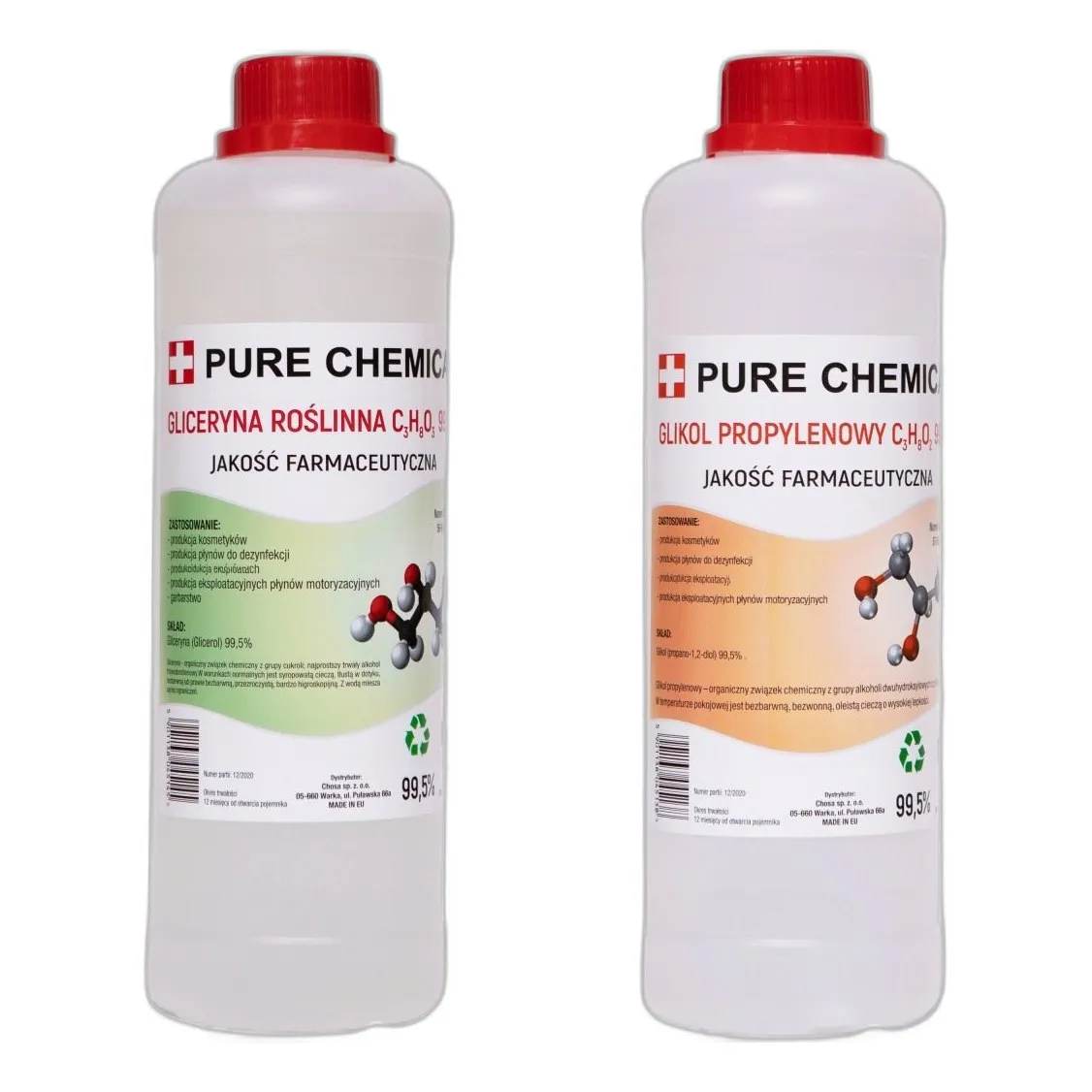
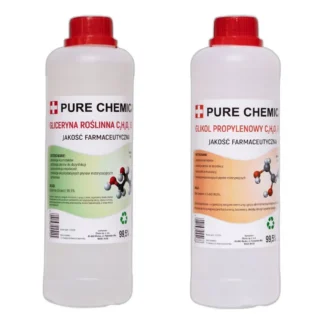
This pharmaceutical-grade blend combines vegetable glycerin (C3H8O3) and propylene glycol (C3H8O2) in a stable 1:1 ratio. CAS glycerin: 56-81-5; PG: 57-55-6. Form: Clear, viscous, colorless liquid. Purity: 99.5% each. Molar mass: Average 90.09 g/mol. Density: 1.19 g/mL. Supplied in ~2.3kg HDPE container with secure lid. Free of preservatives, ethanol, or animal derivatives. Complies with USP and Ph. Eur. standards. For laboratory and industrial applications only.
Applications
Used in pharmaceutical base formulation development. Applied in transdermal delivery system research. Employed as co-solvent for poorly water-soluble actives. Suitable for inhalation solution testing. Utilized in cryoprotectant mixture optimization. Supports polymer solubility and film formation studies. Used in humidity control experiments. Ideal for calibration in density and viscosity instruments.
Specifications
Appearance: Clear, syrupy. Odor: Mild, sweet. Solubility: Fully miscible with water and ethanol. Residue on ignition: ≤0.05%. Water content: ≤0.4%. Heavy metals: ≤10 ppm. Storage: Keep tightly closed, protect from moisture. Shelf life: 36 months. Compatible with glass, HDPE, PP. Stable under normal lab conditions.
Safety
GHS00: Not classified. H302: Harmful if swallowed. H319: Causes eye irritation. P264: Wash skin after handling. P305+P351+P338: Rinse eyes with water. Use standard lab precautions. Wear gloves and eye protection. Not for human consumption. For technical use only.
FAQ
Can it be used in drug delivery studies?
Yes. USP-grade purity supports pharmaceutical formulation research.
Is it stable at high temperatures?
Yes. Stable up to 150°C in inert atmosphere for thermal testing.
How to prevent microbial growth?
Store in sterile, sealed containers; use aseptic techniques.
What is the best way to mix it?
Stir gently at room temperature to avoid foaming.
Can it be used in inhalation research?
Yes. Commonly used in aerosol and nebulizer formulation testing.
References
PubChem – Glycerol | PubChem – PG | Wikipedia – PG | ECHA | SDS available via HarutyunyanEN support.
Reviews
There are no reviews yet.